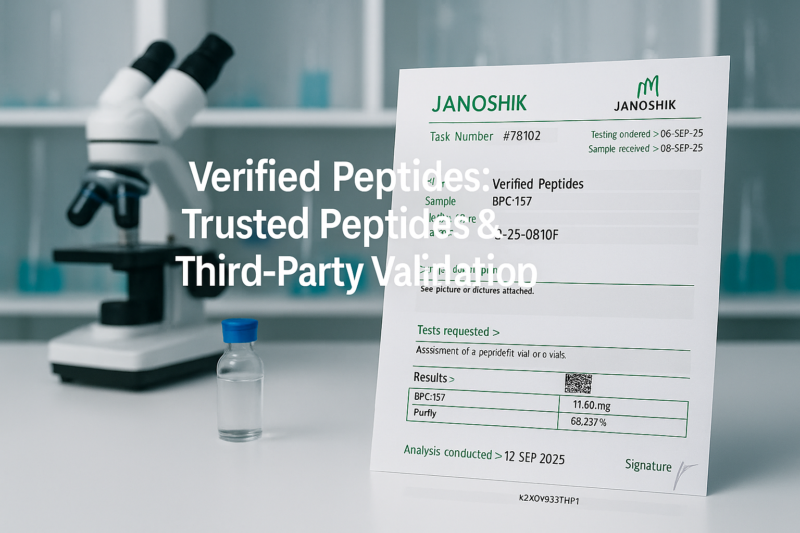
Peptide Storage Space And Handling Store reconstituted peptides at fridge temperature level (2-8 ° C) for short-term use. The majority of substances maintain appropriate potency for 3-8 weeks under refrigeration, though this varies by certain peptide. Many peptide series contain amino acids prone to photo-oxidation. Tryptophan and tyrosine deposits are especially vulnerable to UV and noticeable light damages. Understanding these differences optimizes your methods for every certain material you collaborate with. Prior to dealing with any peptide materials, prepare your office. Wipe surface areas with 70% isopropyl alcohol and permit them to completely dry totally prior to placing devices or materials on them. Reputable peptide vendors give Certificates of Evaluation (COA) with their products. Adapters are much more typical in clinical setups than research applications. Their cost makes sense for high-volume use yet may be excessive for typical peptide procedures that exhaust vials within a few weeks. Topical solutions require various prep work than injectable remedies. The Certificate of Analysis peptide may need incorporation right into lotions, products, or various other automobiles that keep stability while enabling skin penetration. Several GH releasing peptides function best at certain times about dishes and sleep.
What negates peptides?
Salicylic acid''s exfoliating action may undercut the peptides, decreasing their skin-repairing advantages. Suggestion: To stay clear of any interaction, use salicylic acid and peptide items at https://wordspringer.com/s/2kU74yK1XI6tG2-Tx_4Ua different times. For example, integrate salicylic acid in your morning regimen and peptides in your night routine.
Ideal matched for short term usage where the option will be made use of quickly. This minimizes the risk of contamination going into the vial. Mixing cold solvent with a cool vial can enhance the chance of cloudiness, slower dissolution, and bad blending. Regular handling typically maintains product security better than inconsistent storage space routines. Handling strategy issues since also excellent storage problems can be weakened by inadequate day-to-day methods. A lot of security loss comes from a small number of duplicated environmental and managing concerns. We provide just the finest quality items for scientific study purposes. By embracing those safety measures and executing solid storage treatments, you can strike the possibility of peptide deterioration and ensure reliability in addition to uniformity of your study projects. Peptides have a natural fondness to "stick" or bind to some surface area to glass and plastic, which lowers the effective concentration of your option.
Do's And Do N'ts Of Storage Space
Recognizing these quantities issues for determining your application procedures. If your study method requires 250mcg doses, that single vial provides 20 dosages prior to exhaustion. The mathematics seems simple, however obtaining it wrong wastes cash and compromises study legitimacy. Peptide vials can be found in standardized quantities that reflect common study needs. You'll come across vials having 1mg, 2mg, 5mg, 10mg, or 15mg most often. Some substances, specifically those made use of at higher doses, come in 25mg or even 50mg discussions.
Usage Storage Assistance As Part Of The Complete Quality Photo
Some vials may have slight vacuum cleaner or interior pressure.
Peptide storage space at high temperatures can trigger biological effects such as architectural modifications, loss of activity, or perhaps becoming unsafe.
Aspartic acid (Asp)-- specifically Asp-Pro concepts-- is specifically hydrolysis-prone.
Return reconstituted peptides to cooled storage space promptly after use.
Think about the activity you 'd make use of swirling a glass of wine in a glass.
The newly made Aβ (25-35) and (1-40) are soluble in oxygen-free water. Some old peptides might need the enhancement of acetic acid for dissolution. It is better to try water or 50% acetic acid and after that thin down with the functioning buffer. This overview offers practical methods for taking care of, storing, and working with peptides in lab setups. Then, the vial needs to be discarded instead of requiring a jeopardized solution into research use. In some cases peptides resist dissolving in spite of appropriate method. Several elements can cause this, and each has options. Angle the needle so water flows down the inner glass wall surface of the vial. This gentle strategy prevents physical disruption of the peptide framework. Including room-temperature water to a freezing vial produces thermal shock. IGF-1 peptides like IGF-1 LR3 need acidic reconstitution for optimal stability. Pure bacteriostatic water might not fully liquify these compounds. Adding a small amount of dilute acetic acid before thinning down with water often enhances results. Shop peptides in brownish-yellow vials or nontransparent containers when feasible. If your peptides arrive in clear vials, keep them inside light-blocking containers or covered in aluminum foil. Scent the remedy, as microbial contamination generates off-odors. Reduced noticeable strength without noticeable adjustments suggests undetectable degradation. When doubtful, dispose of and replace rather than taking the chance of compromised research. For scientists keeping peptide collections or dealing with products that need to last months to years, storage space optimization becomes critical. This matters most for very weaken options where peptide loss to surface areas stands for a substantial portion of total material.